
Forum Replies Created
-
AuthorPosts
-
I’m warming up the coffee maker!
😀
D
Hey Matt,
What’s the occasional ‘Yes’ in the set notation? Is that you singing?Daniel
Y’all are welcome any time you’re in France. We’re a little over an hour from Charles de Gaulle airport, Paris. 🙂
Daniel
Every country/culture seems to have a different word for jam or a different way to jam if that use that word.
In the UK, a participatory event is called a “session,” but it’s not really a jam. More of a song circle, and if you play along, you sort of need to arrange that with the person singing before the song starts.
A jam here in les-Hauts-de-France is an amplified event (Rock being KING in this neck o’ the woods –not sure about other parts of France). It starts with a short set from a band and then people in the room are encouraged to get up 2 or 3 at time and play a few numbers before relinquishing their spot to someone else. You Do Not bring your own amp. You can bring your own instrument or borrow one from the organiser, a guy who has carried in and set up the PA, a drum kit, a decent keyboard, a bass, an electric guitar, an acoustic guitar, and all the required sound reinforcement along with a few lights.
(I learned all of this the hard way and speaking very little French. 😉 )
Claudine and I have hosted house concerts in England, and done one in France so far. At these I usually lead a more American version of a jam afterward. I find three chords songs indispensable:
Speed of the Sound of Loneliness
Helpless
Knockin’ on Heaven’s Door
You Ain’t Going NowhereBut my guitar player, Julien, is a huge Neil Young fan. So we end up playing
Powerderfinger
Down by the River
Old Man
Harvest Moon
…etc, etc…🙂
Daniel
April 26, 2019 at 6:57 pm in reply to: The Elmwoods and the Muted Jewel Tones at the Uptown Club in Oakland #2118This is great. Well done all!
Daniel
Been guilty of hitting the accelerator on occasion as well. Sometimes the muscle memory takes over.
Thoughts:
As Matt Hayden says, use a metronome. If the clicking is intimidating or bothersome, you can get more sophisticated metronomes. Check out the apps available for smartphones and a thing called the Pulse made by Soundbrenner.Backing tracks are cool. But they are limited to other people’s songs, and only those songs that are popular enough to make them feasible.
Don’t let the singer carry the tempo. They can set tempo by counting off, but one of the cool things about singing is pulling and pushing the beat to emphasize the lyric. If you follow that, you’ll be speeding up or slowing down accordingly, and they need you to keep time so that the rubato has a beat to work against.
Keep it simple. If down strokes on the 2 and the 4 work best, then don’t embellish. Guitars have a lot of sustain. You can use that to your advantage.
Playing with drummers (even if they are not playing a drum kit) will be better than playing with violinists, harmonica players, banjo players, etc. This is because those instruments are really not keeping an obvious beat.
Hope this is helpful!
D
Taylor has an entirely different design ethos than SCGC. It’s not worse or better, just different.
Taylor seems to focus on neck design/ease of play and then make the sound boxes (bodies) as identical as possible from unit to unit across a model range.
This is a good way to go if you’re building thousands of instruments a year rather than hundreds.
SCGC being smaller can focus on the entire instrument, take more time per instrument, source more unusual (small quantity) woods. The result is a wonderful sounding instrument every time.
Daniel
nicely done!
Daniel
I enjoyed that. Thanks for posting it Richard.
D
Thanks Richard! Will do!
(Have been toying with the idea of adding “John Barleycorn” to the CD. I played it 30 years ago in a prog/jam band I was in while living in Davis, CA. Recent Youtube version by Steve Winwood brought it back.)
Daniel
Zorro, my foxy friend, you should start playing fiddle tunes. Look up flatpicking lessons on You tube and dig in. Way more fun than scales alone.
🙂
Daniel
I think Scott Nygaard uses a 2 note G-run. He keeps it simple because he’s usually playing in a band and the spaces are more limited.
Daniel
Thanks Gents. 🙂
I have been looking at the work of a local photographer named Guy Lejeune.
One of these http://www.guy-lejeune.weonea.com/galerie/8731/17/
or perhaps I’ll ask him to take photos of some of my instruments.🙂
D
Howdy JW and welcome,
Body wood: Mahogany is more focused than Rosewood of any kind. It’s not really a substitute. IF you like the Brazilian sound, consider Indian rosewood or perhaps cocobolo.
Top wood: I found German and Italian spruce to have a bit more ‘bell’ in the top end than Adirondack (Red spruce). But has been years. So defer to more up to date opinions.
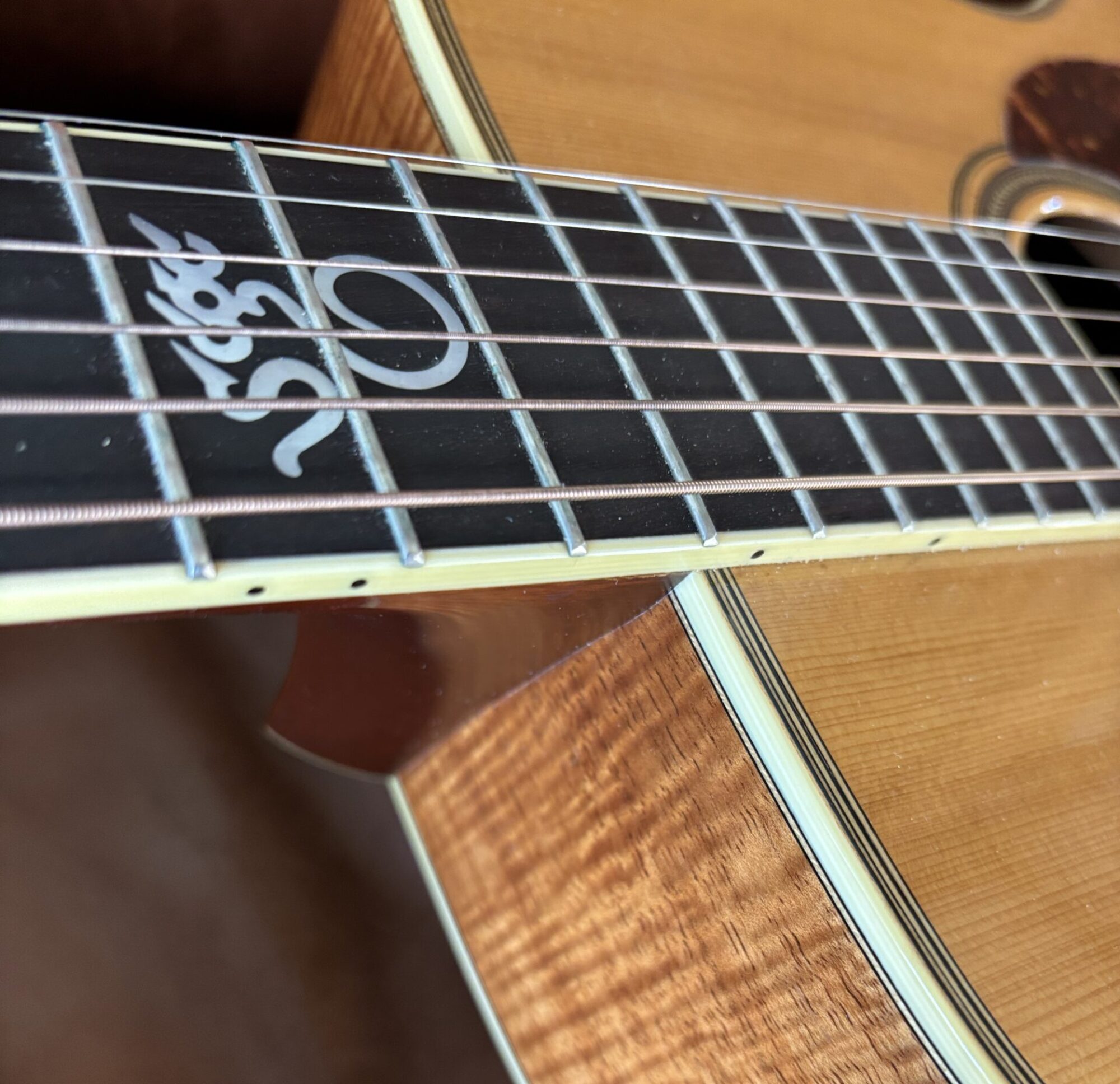
Fret markers: As long as there are marker on the side of the neck, looking up at me, I’m OK. The big ones on the fret board are for show.
IIRC, more than 50% of SCGC’s output is custom. Usually they are variations on existing models. Give the shop a call and discuss. They’ll be happy to talk to you about all this!
Daniel
Wet wet wet here in Picardie. Dehumidifier humming in the background. Instruments tucked up in their cases. Heaters on to a significant setting.
Practiced new material with my guitar player, Julien, last night in the Cave. A bit cold as the night wore on and the heater just did not have the power to fight the drafts.
I would relish some time in a warmer climate. I’ll bring some French wine. 😉
California vintners produce some good stuff. When I lived in California I drank it on special occasions or when we went wine tasting in Sonoma or Napa. I have since tasted what we lovingly call ‘Papa’s Plonk’, a common table Bordeaux that my father-in-law buys by the shipping box and bottles for later consumption. I can say confidently I shall not miss California wine.
Daniel (paying existential dues for living the good life in France)
-
AuthorPosts
