
Forum Replies Created
-
AuthorPosts
-
I don’t think it was ever “standard”, but I also don’t know what options were offered or available back then. It’s the first I’ve seen. I hope to talk with Richard about this one at some point, and he may fill us in on some more SCGC history –
I got that from Richard many years ago – it is perhaps one of my dearest SCGC possessions. I would suggest asking the shop what the status of those are, and if any more are available. I think it would be a great thing to re-print!
Thats what they charged Harry for this one, back in 10/81 – I paid considerably more, and happily – 😉
Ukulele?
Unfortunately, Richard told us in our latest podcast (#39) that they’ve pulled out of all shows for this next year – even NAMM. But we are starting to see improvements! He also said that with reservations, they are doing some shop tours on days no one is actually working in the shop, so if you make it out to Santa Cruz, you can probably arrange a tour, and probably with the man himself! But as far as getting together with the maestro “in the wild” so-to-speak, its gonna be a while longer.
He did disclose some very exciting info about a new . . . . uh, I think I’m not going to spoil the surprise, and let you listen to him yourself. Sorry! [ not really – 😉 ]
Happy Bday Daniel!!
I am really happy that this has exceeded your expectations – and your aesthetic choices worked out really well. I know this was a very special birthday gift to yourself, and its working out so well is fantastic. But remember, you have some other great guitars that’ll need a little attention too!
March 5, 2022 at 2:05 am in reply to: Trying to understand the differences between the different F models #7003Wow – there aren’t a lot of differences between the F and FTC, other than the carved back on the FTC, as far as I know. It would be an interesting question to pose to Richard if there were any specific bracing differences. But visually, I don’t see anything. So the carved back is really the big deal – it is stiffer (I think) than a braced flat back, and it seems to offer more focused projection of the sound towards the front. That all sounds good, but it really changes the voice of the instrument. If you can compare an archtop guitar to a flat top, the FTC picks up some of those characteristics. But its not entirely either. And personally, I love the FTCs “bark”, but it would never be “the one” for me – thank goodness I don’t have to choose just one!
The F is a really nice body size/shape – very versatile, and it feels good in your hands. Its a really good alternate to an OM – if you want a cutaway, an F is a great choice – no cutaway, I’d probably go OM. But if its a question of commissioning a guitar, I’d start by doing your best to try one out just to see how it feels, then I’d talk to Richard about what you are looking for soundwise. I think there’s a good reason the F body is used for the FS model, which is a very responsive fingerstyle instrument. I think it may offer, with the choice of woods, the most open palette to create an instrument as specific tonally and responsively as SC possibly can. But that is purely speculative –
I don’t see many Fs around – not sure what to think of that, but it may be a model designation that isn’t in every builders catalog, while the OM is – but a maple F is my regular play-out guitar, and one of my favorites.
I’d never heard of that one – intriguing, but the batteries and such make me suspicious.
I’ve now installed 2 James May Ultratonic pickups, and I am still incredibly pleased with them. The tone is good, no batteries, no feedback when set-up properly – they’re just good, and simple to install. I don’t feel any need to look further –
I also have a Barbera Soloist installed in a Sexauer 0, and it is also extremely nice, but installation is trickier, and it replaces the saddle, so it’s not quite as simple – and I think its also a bit more expensive. It came with the guitar, and I really like it, but doubt I’d install another one at this time.
And ultimately, there’s the K&K – which is OK and does the job, but best thing about it is its an easy job to upgrade it to an Ultratonic – 😉
I found a very heavily used and somewhat abused FS on Craigslist some years ago – the finish was crazed, numerous dings and dents, a couple non-structural cracks, fret wear, etc – but it was cheap ! I gave it to a friend who is a very good guitar player, but had never managed to afford a very good guitar. On the occasions I get to see him play, I am always pleased to see it on stage with him –
Those first 2 CSNY albums, along with Bridge over troubled water, were the very first albums I ever had – along with my first Radio Shack stereo phonograph ( which replaced the – ready for it – gramophone I had that had come from my grandmothers house ), for maybe my 13th birthday? I can’t help but feel something very special whenever I hear them. It’s one of those life-moments that gets burned indelibly into your brain, that first setting of a real needle onto a 33-1/3 rpm record, and to hear those chords ring out. The leap from Alexanders Ragtime Band to Carry On was never to be undone.
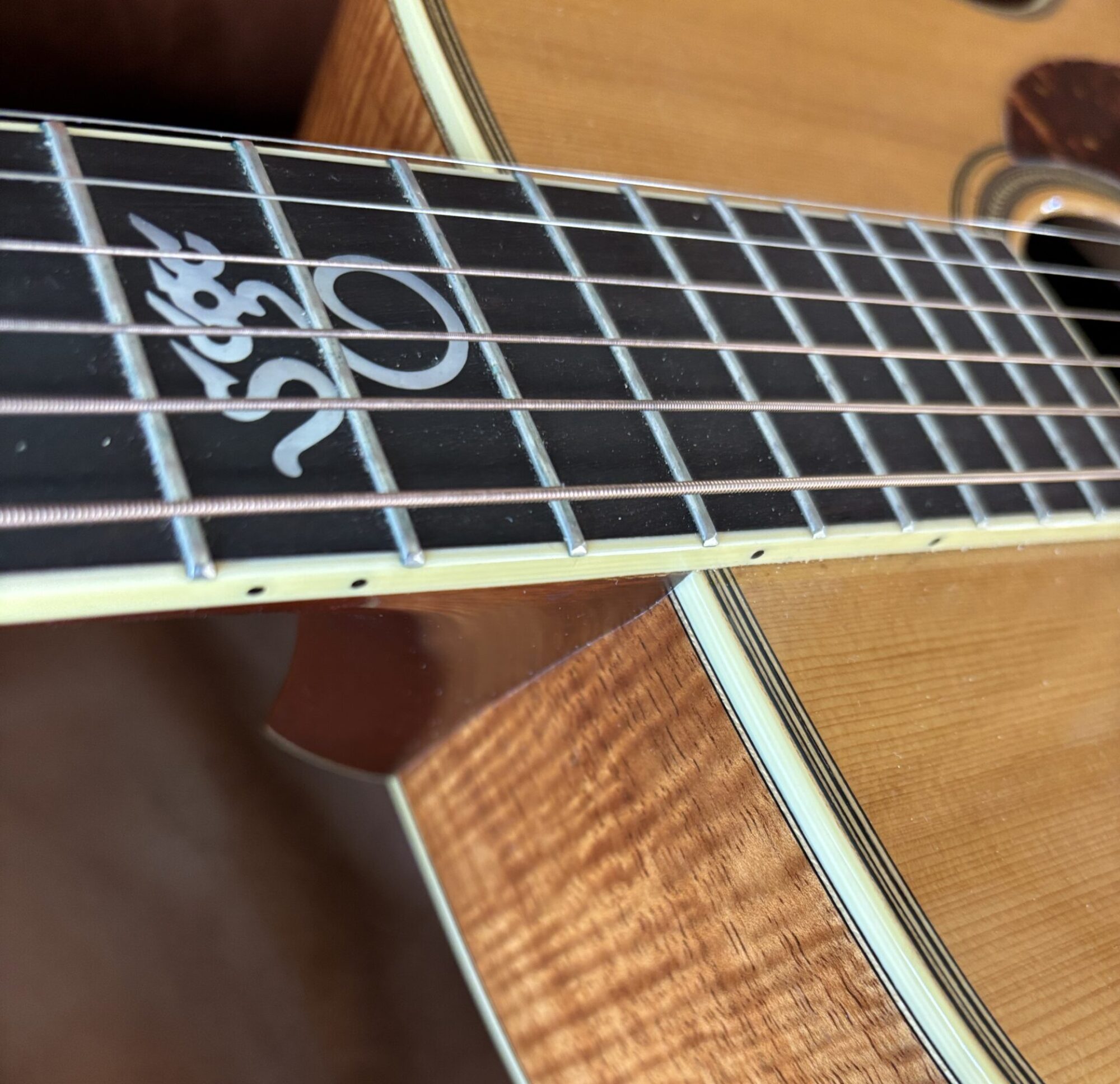
It was either #18, or #28 – #28 has the inlays, and a spruce top, voice has a little less “bark” –
February 6, 2022 at 6:18 pm in reply to: Find out and vote for what 8 songs you should never play in Guitar Center #6928Well – that’s Chris’s whole set list, isn’t it? 😉
I can’t come up with 8 at the moment, but the ones that come to mind most quickly are –
Stairway to Heaven
Freebird
Satisfaction
– but beyond that, I’ll need to think about it – mostly ‘cause the songs I don’t wanna hear are ones that nobody plays anymore!
Thats a pretty good description of an FTC in general! 😉 But yes, I think this is the one you played. Looking forward to getting together again – someday –
A number of us have had the pleasure of spending a little time in the workshop, and watching the luthiers at work. It really boils down to Richards expectations, and the way he approaches the tradition. He’s a very strict traditionalist – he’s paid very close attention to the way guitars and other stringed instruments have been built, and whats worked, and what hasn’t. He took the best of what worked, and refined it through training, tooling, and jigs, so that each luthiers skills are able to be best used, and they are not “wasted” on aspects of the job better suited to a machine. And he went one very special step further – there are steps that can be done well by machine, but are done much better by hand, and those jobs are still done by hand – even though that labor makes the guitars more expensive. As he says, they don’t build to meet a price point, they build to make the best. One example is fitting the neck to the body – machinery and jigs can make that joint and that alignment very good, and most shops leave it at that (maybe throw in a couple bolts and some shims) – but the luthiers at SCGC spend a lot of time fine tuning that connection, with specially made measuring tools and jigs, flossing that connection (running strips of very fine grit sandpaper) by hand between the neck and body, removing a thousandth at a time, until it’s perfect in fit, and in the ways the neck aligns with the body. And thats just one of numerous build details that are important to Richard, and all together, add up to make a Santa Cruz such a special instrument.
Every person with a SC guitar should tour the shop – in many ways, its both a let down, and awe-inspring. Awe-inspiring, because, well – if you have a SC instrument, you know. The let down? No secrets, no magic, nothing up their sleeves – just dedication to obtaining the best materials they can, and the willingness to put in the work and effort necessary to do it right, even if it costs a little more. Something any luthier could do, and that knowledge is something Richard shares freely. And yet, IMHO, no shop does it quite as well as Santa Cruz –
-
AuthorPosts
