
Forum Replies Created
-
AuthorPosts
-
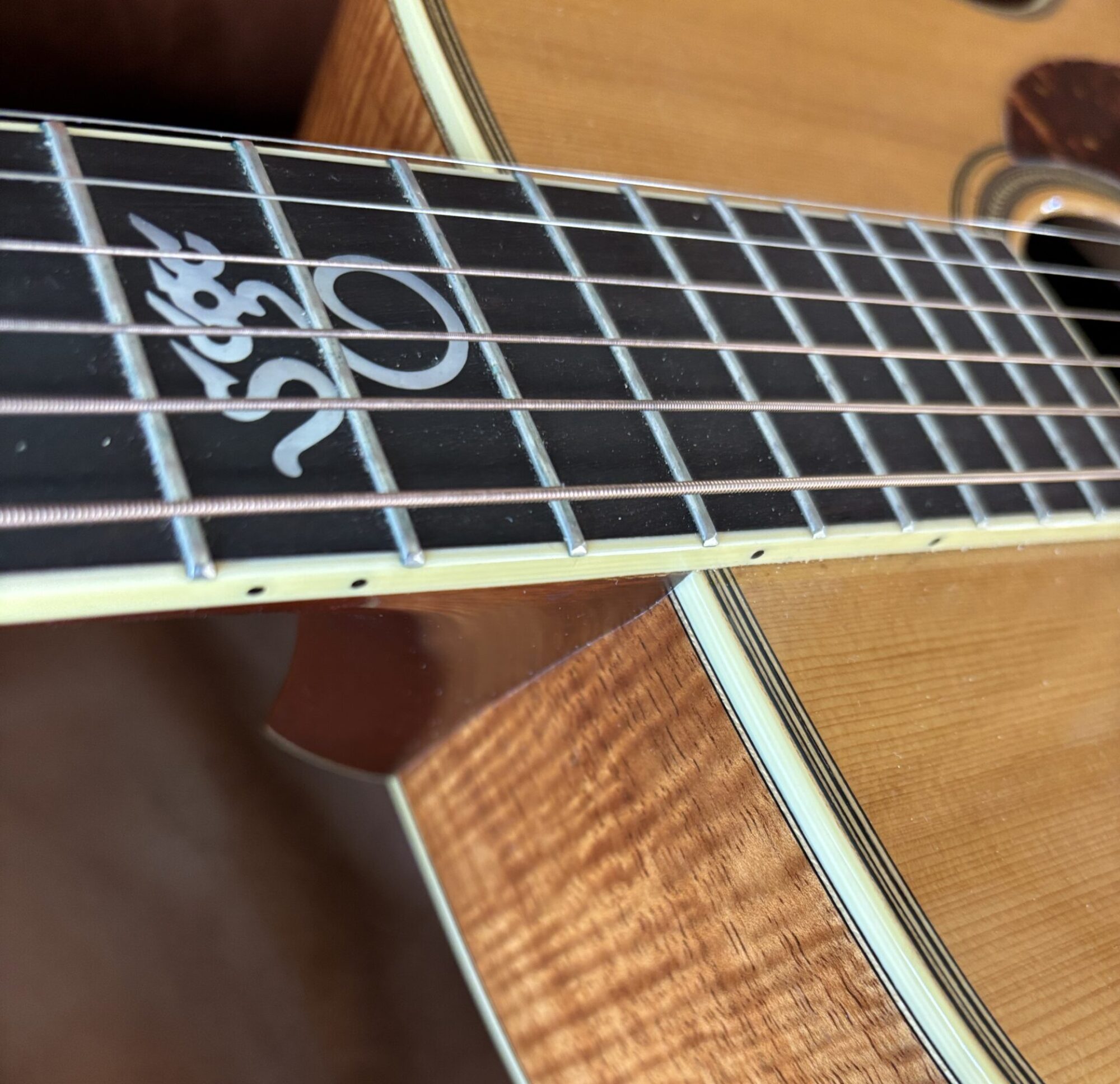
Love that headstock!!
I think the rule Richard says is that you need to keep an eye on your guitar, and see how it reacts. The extra tension may raise you action a bit, so a slight adjustment of he truss rod may be necessary. But if the action continues to go up, or you notice the belly rising or the bridge rotating/lifting, those are warning signs and you should probably take the heavier strings off and go back to lights.
That said, the medium tension from Santa Cruz is not much more than most other brands light tension, so I doubt you’d have a problem, and it would be a fun experiment –
They both look legit from the pics you put up, but I have not seen the label that you show on the one on the right. And if there is no serial number on it, I’d be highly suspect – but I think they have done a few runs of ukes, once mine is #109, and it has the old logo, so I would not be surprised to see some made with the new logo – but again, I’m quite sure they would have a serial number.
You know what they say – pics or it didn’t happen! 😉
We should ask – if there were podcasts YOU found particularly memorable, or enjoyable, please let us know!
You have absolutely nothing to lose if you use a soft cotton cloth (old T-shirt or maybe a piece of felt) and a bit of water – it should minimize the issue a great deal, but you may have a little paint that has gotten abraded into the finish. For that, a very fine polishing material may suffice – you can try a bit of fine cigar/cigarette ash mixed with a bit of water, with the same cotton cloth. You can work your way up to more aggressive grits if you want, but you can also check with a local luthier and see if a quick swipe on their soft buffing wheel may do the job in a couple seconds –
They made not very many of them – as far as I know they were offered in mahogany or koa, but I heard a rumor about maybe one in Brazilian. As Richard said – while they are smaller, thus using less material, they take an equal amount of labor, and thats where most of the cost is. So if you do find one, they tend to be pricey – but they are excellent instruments – and everyone likes pics –
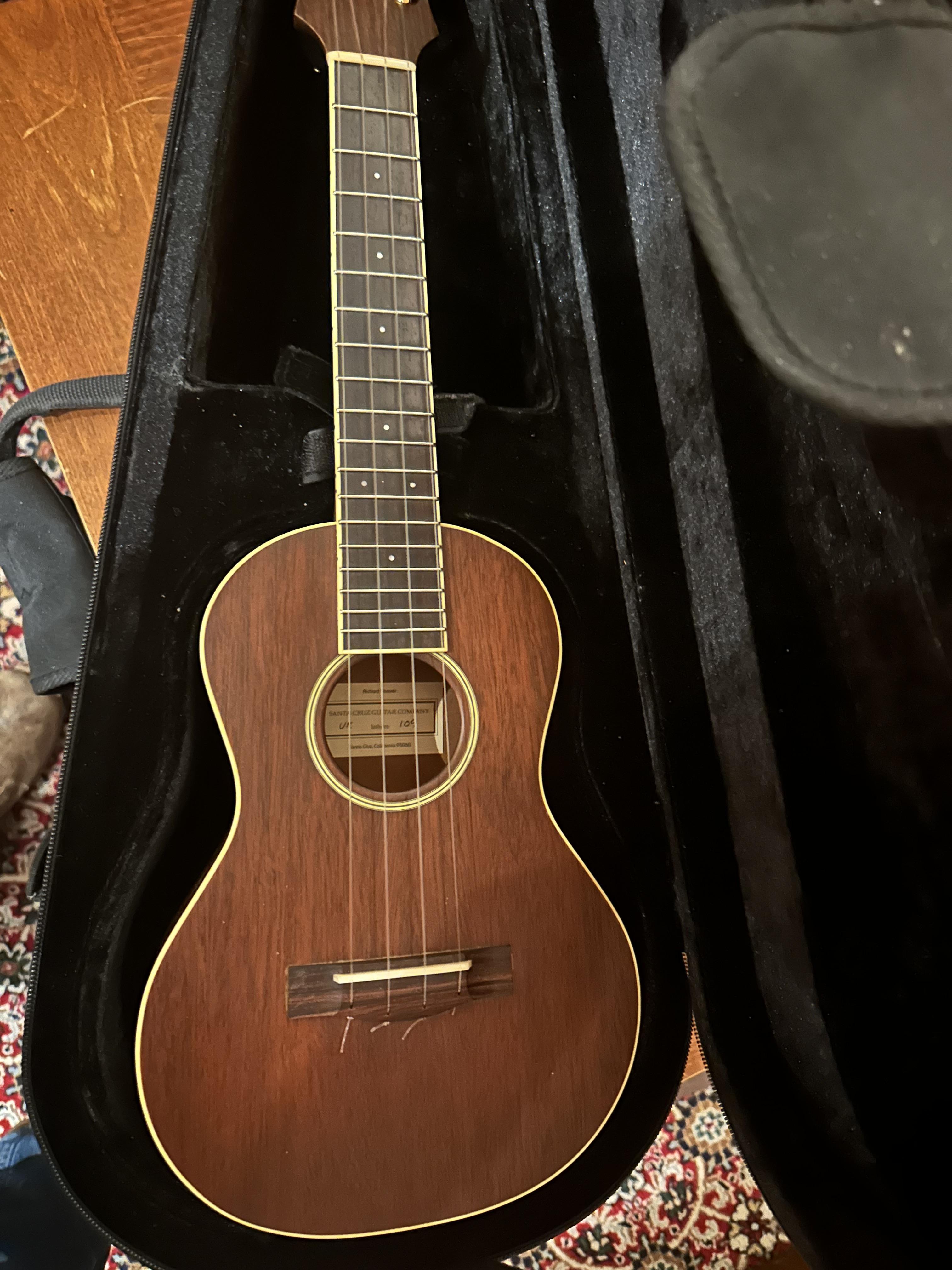
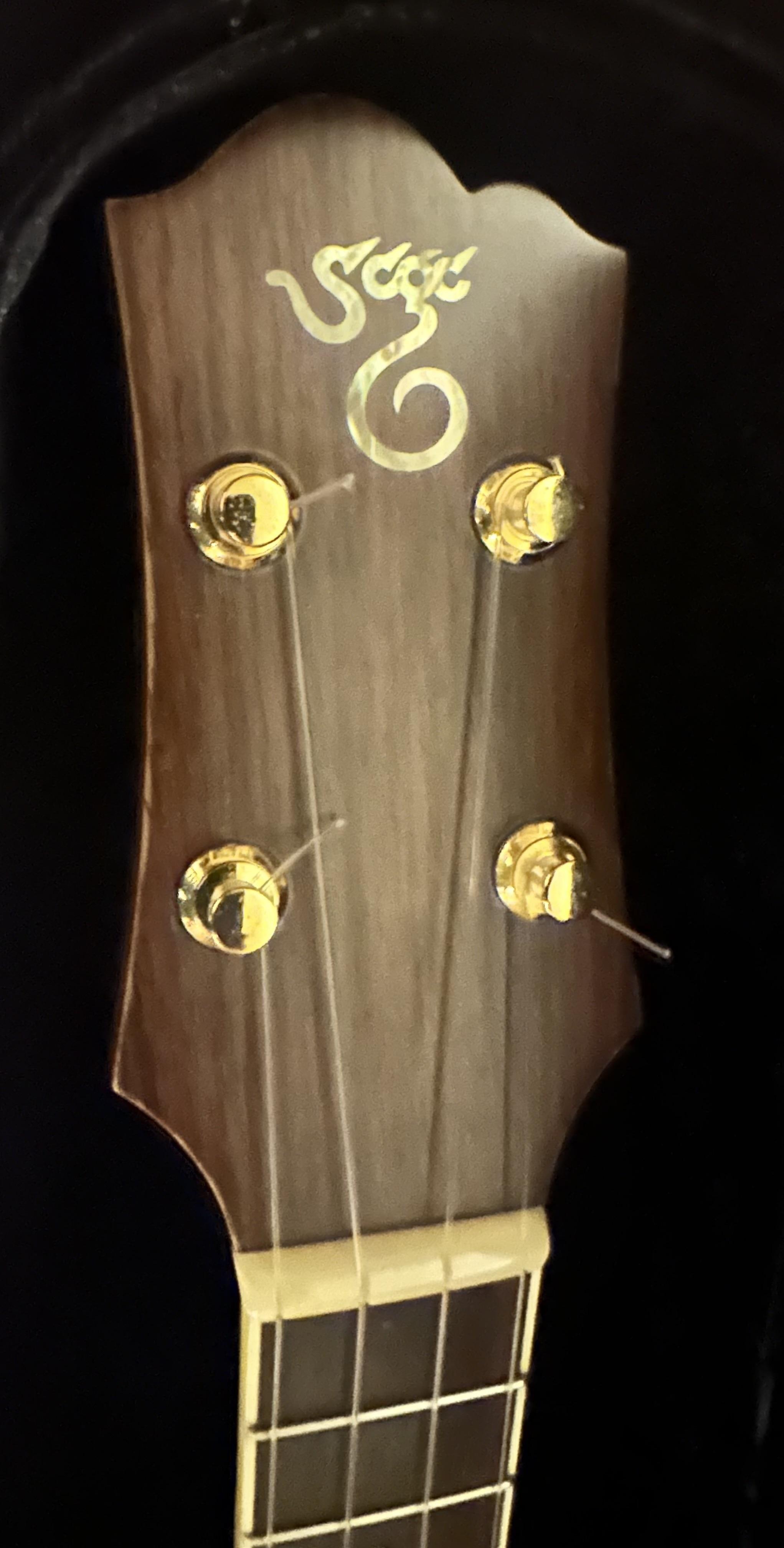
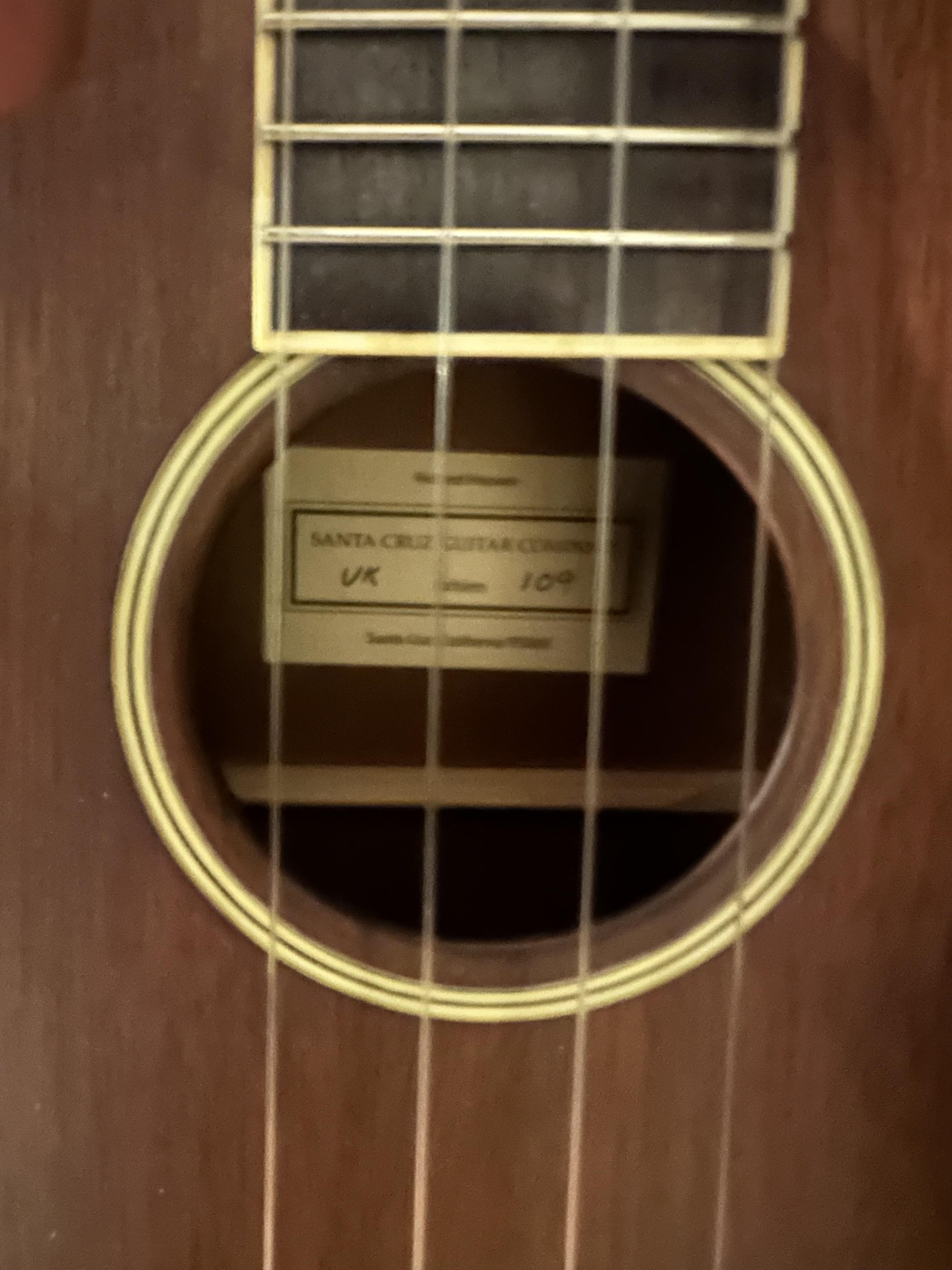
Oh boy! Me too!
July 9, 2024 at 3:53 am in reply to: Are you using humidity control products in the case with your acoustic guitar(s) #8824It’s interesting to read this – I recently installed a mini-split in my music room, and truly love it – had some reasonable and very quiet heat during the end of winter, and recently, with this CA heatwave, had some very sweet air conditioning. –
But after rehearsal the other night, I forgot to turn it off, and when I came in a day and a half later, the room was very nicely cool, but it also was under 20% humidity! Yikes!
A quick check of the guitars showed no damage, but they sure were dry! My archtop was flat! So no AC for a while, and I hung a couple wet towels in the room for a couple days. So from now on, I’m gonna be much more careful about checking room humidity whenever I think about running the AC!
Pretty much every acoustic guitar made these days has a radiused back and top – the amount will vary, but the mechanical advantages that radiusing offers is almost impossible to ignore. When a radiused top dries out, it will flatten out before it splits – a flat top will just split. When a radiused top gets over humidified, it will raise before it cracks other parts – a flat top won’t – a radiused top allows you to build lighter in thicknesses and structure, which lets them make a more responsive guitar –
What radius SCGC uses I can’t remember, or don’t care about – I’m confident that whatever Richard has decided is best for SCGC is whats best. And I don’t know if it’s changed over the years, or if it’s different for different size bodies. But I’m pretty sure Richard would be happy to tell you if he’s asked –
Welcome!!
I’m pretty sure bound fretboards are entirely an aesthetic thing – they can just use ebony rips so you don’t see the slot ends, or they can use a contrasting color, or they can even use multiple colors – quite an array of effects available. But even when the slot ends are left visible, most luthiers will trim back the tang of the fret so that if the fretboard shrinks, you don’t have the tang hanging out over the edge, as that would be a major complaint right away. But thats just my opinion –
Personally, I kinda doubt SCGC is gonna be able to routinely offer individual strings. But I’m willing to be surprised –
I’d try an online string source and get a couple different gauges of single strings and see how they work for you. It might be the simplest and most efficient way to accomplish what you want for the time being – please report back!
2023 is still a new guitar, and if it hasn’t gotten a lot of play, it may still need to open up (although old strings could also have been at play). Using a heavier gauge string, and playing it a lot, will certainly help. Just (as Richard would tell you) keep an eye on your action, and if needed, keep the guitar adjusted to accommodate the strings you’re using.
We all know how great SC guitars are, but the F model, especially in maple, is an exceptionally nice guitar – I thought I’d kinda locked up the market on those (😉) – I guess they keep building more. Not sure how/what you play, but I put an UltraTonic pickup in a couple of mine, and they are great plugged in.
Enjoy!!Oh – where would I start –
-
AuthorPosts
