
Forum Replies Created
-
AuthorPosts
-
The real voice of the guitar is around the bridge. I don’t like to make changes in mass around the bridge and I certainly don’t like the impact of an under saddle pickup. But, just having small pads glued to the bridge plate or a mic pickup around the side of the rosette (where vibrational transfer is less important) is not something that concerns me.
All that said, I really dislike the sound of acoustic pickups compared to a mic in front of the instrument so I’ll always choose a mic when afforded the opportunity.
I’ve actually found them to be the most economical strings I’ve ever used. They last me over a year. Even Elixrs sound bad to me after 3 months. And, most strings are dull after 5 days. The SCGCs sound nearly the same for around a year, for me at least, and then start to mellow. Your mileage (body chemistry, frets, etc) will vary.
Beautiful instrument!
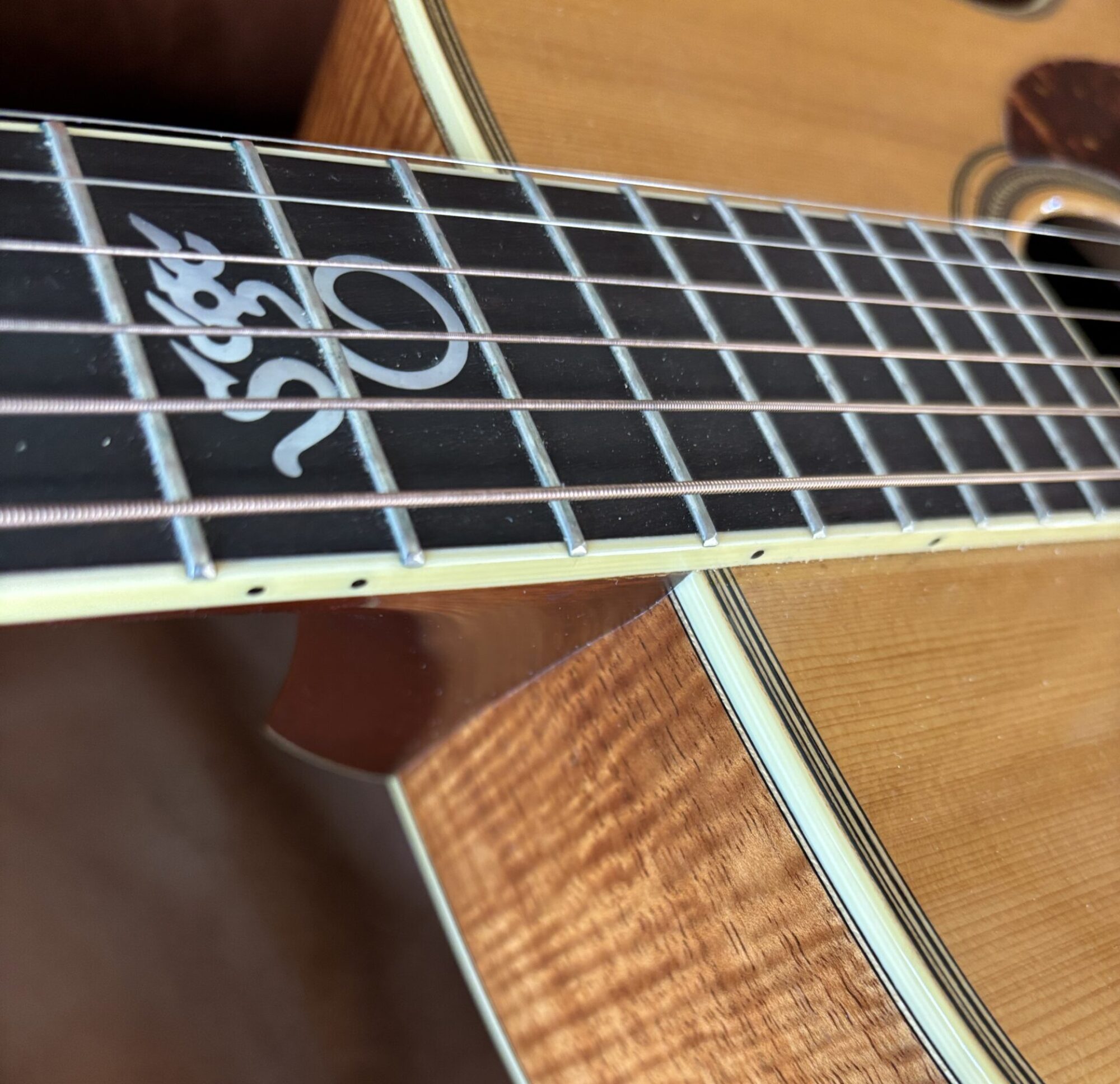
I’d venture to guess the top is Sitka spruce based on the grain and silking. The back and sides mahogany. Though these are some of the more common acoustic woods, SCGC disproves the notion that some species of wood sound better than others. They just sound different. My SCGCs with standard woods sound better than my Brazilian rosewood and Adirondack spruce guitars from other boutique makers. It’s really about the maker, not the wood species.
When tuning down, the tension is dropped so you’re essentially no longer at mid tension and there’s no issue.
You can keep an OM strung to E standard with mid tension (equivalent to 13’s) but it does put more stress on the instrument over time. We’re talking many years. It’s not usually recommended but many people do it without issue.
Wonderful to see an answer straight from the shop. I’ve bugged them many times and, while they don’t always have an answer or recollection, the fact that they listen and try is what matters to me.
Everything else looks correct. Considering how small an operation it was back then, I wonder if the sig just got overlooked.
I use the lights on everything. Even a 12 fret dread tuned down a whole step and they still sound clear and powerful, unlike other brands of lights I’ve tried.
When you take the strings off, lay your phone on the back (under the bridge) with the flashlight on. Then use the mirror to check South of the bridge plate. That should let you see the sig.
Yes Richard, I have an all mahogany SCGC uke. Not signed, but the shop verified the serial # and was able to look up the build sheet.
The only one I’ve had that wasn’t signed was a uke. On the darker woods (redwood, mahogany, koa) the sig was harder to see but it was there. Not always on the same side of the bridge.
Thanks for sharing!
Sounds like a good idea. There’s gems in every episode. Would be great to have some compiled.
Best to test it yourself. The angle at which a strap pulls on the pin means a strap typically can’t remove the pin. But, some of them get quite loose. If you find it’s not snug enough for you, I’d use nothing more than a drop of white or yellow glue. Something that can be broken loose should it ever need to be removed for repair or modification.
Welcome to the club! Yes, they’re incredibly light and resonant. Even the small SCGCs sound huge.
I personally don’t use scotch brite on my strings because it leaves grit/dust when used on the wound strings. A cloth after playing is enough. If you really hate changing strings, running the cloth under the strings helps a little. Since I started using SCGC strings I easily get a year out of the strings just by wiping the tops of them after each play.
Eh, I bought several types from boutique pick companies (even beta tested for one of them) and, while they are nice, so are the freebies the string companies give me. I think one of the things that makes boutique picks sound “better” is that the edges are polished. Not that the actual material is somehow superior.
I recently went through all the picks I’ve collected over the last 35 years and was surprised to find an obscure Japanese “Pickboy” ceramic/nylon with dimples on it was my favorite. Dunlop Ultex are still my go-to. I’m a tone snob and have no problem buying expensive gear, but I don’t feel that expensive picks are better, just different.
-
AuthorPosts
