
Forum Replies Created
-
AuthorPosts
-
Good on ya Hank…
Hank, I hope that it is everything that you hoped for (and then some!).
Congratulations…
Back east you need to constantly stay on top of managing the guitar room environment. I like to keep my guitars out on a rack so they get played. There are three guitar seasons:
– Late October to End of April – Run humidifier to Augment the Room (+, or crack season)
– May to Mid June & Mid September to Late October – No Supplemental Adjustment Required
– Mid June to Mid September – Run AC to reduce % RH out of the air (-, guitars sound bad season)
Since we are likely to retire out west where it is dry, I will invest into one of these…
https://www.aprilaire.com/whole-house-products/humidifier
A luthier friend of mine uses one of these to humidify his 2,000 sq. ft shop.
Hygrometers are notoriously inaccurate. When you see 39% RH, I would always interpret that as somewhere between 35-45% RH. Anywhere between 40-60% RH and you’ll should be fine typically. Even with transient dry conditions (< 24 hours) in the 30-40%RH range and I would be surprised if you’d encounter a stability issue. I keep a large analog and digital hygrometers in my guitar room. They never fully agree but are usually within 5% RH of each other. I haven’t done a salt solution calibration in too long. I have a 5-1/2 gallon evaporative humidifier in my 10’ x 20’ guitar room set at 45% RH hoping to keep it in the 40-50% RH range. With the doors closed that lasts about 5 days in the cold Northeast winter. To me, my guitars sound best slightly dry at 40% RH.
Cool guitar Tad (thanks for sharing)!
It is always difficult to see if there are internal pitch pockets in a 1” billet of maple or spruce. Archtop makers deal with this challenge routinely. As you know, I own three non-SCGC carved back flattops (one being a nylon string) and they all have a unique voice compared to their ladder braced, flat backed cousins. In fact, I also own a carved top / flat backed archtop (the inverse).
Thanks for the history Richard (much appreciated).
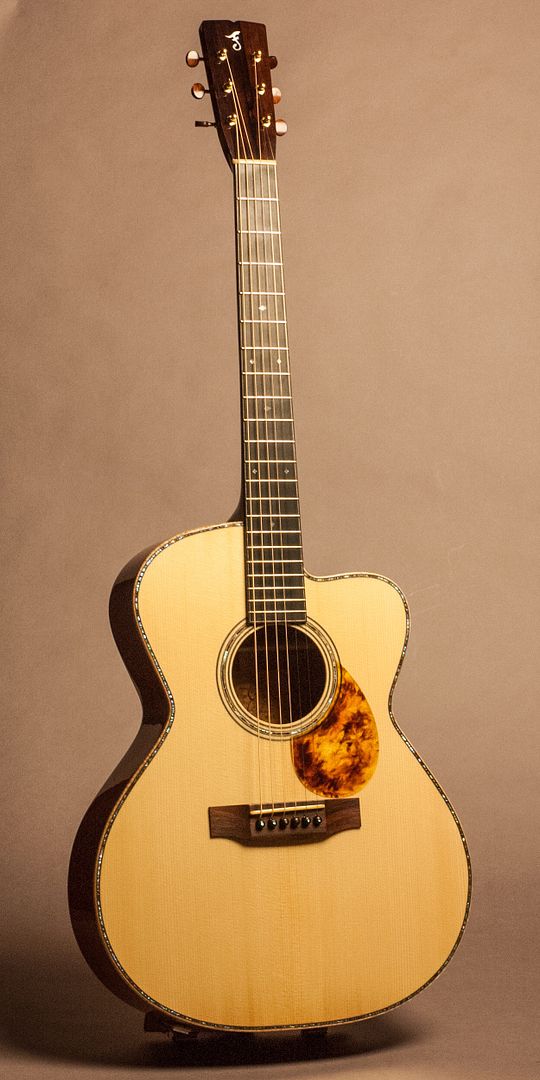
Like all things guitar, forgetting where the model origins started only tells part of the story. If my FS is #1375 coming off the SCGC bench, I suspect that over the last 35-years the guitar design, construction and customization knowledge has evolved it into being a better instrument than the one conceived by the team in the 1980s.
I had it mostly right(Better than WHM) in the build thread that I created for my custom FS over at AGF where I said:
<i>“The FS model was originally developed by Jeff Traugott, Michael Hornick and Steve Palazzo who were all working at Santa Cruz about 35-years ago.”</i>
I hope to see you at the Artisan Guitar Show in April.
Bob
Congratulations…An OMG is a 0000 / M sized instrument (16”) correct?
I received another update from Carolyn yesterday.
Santa Cruz, being a “small shop” that makes about 400 guitars/year has incorporated CNC into certain repetitive operations such as the rough creation of necks. The roughed Honduran Mahogany neck blank still left large along its middle section with features to locate the Ebony fretboard and for subsequent neck shaping operations. A body accessible, double action truss rod has also been installed and with a top shim along with a Peghead veneer.
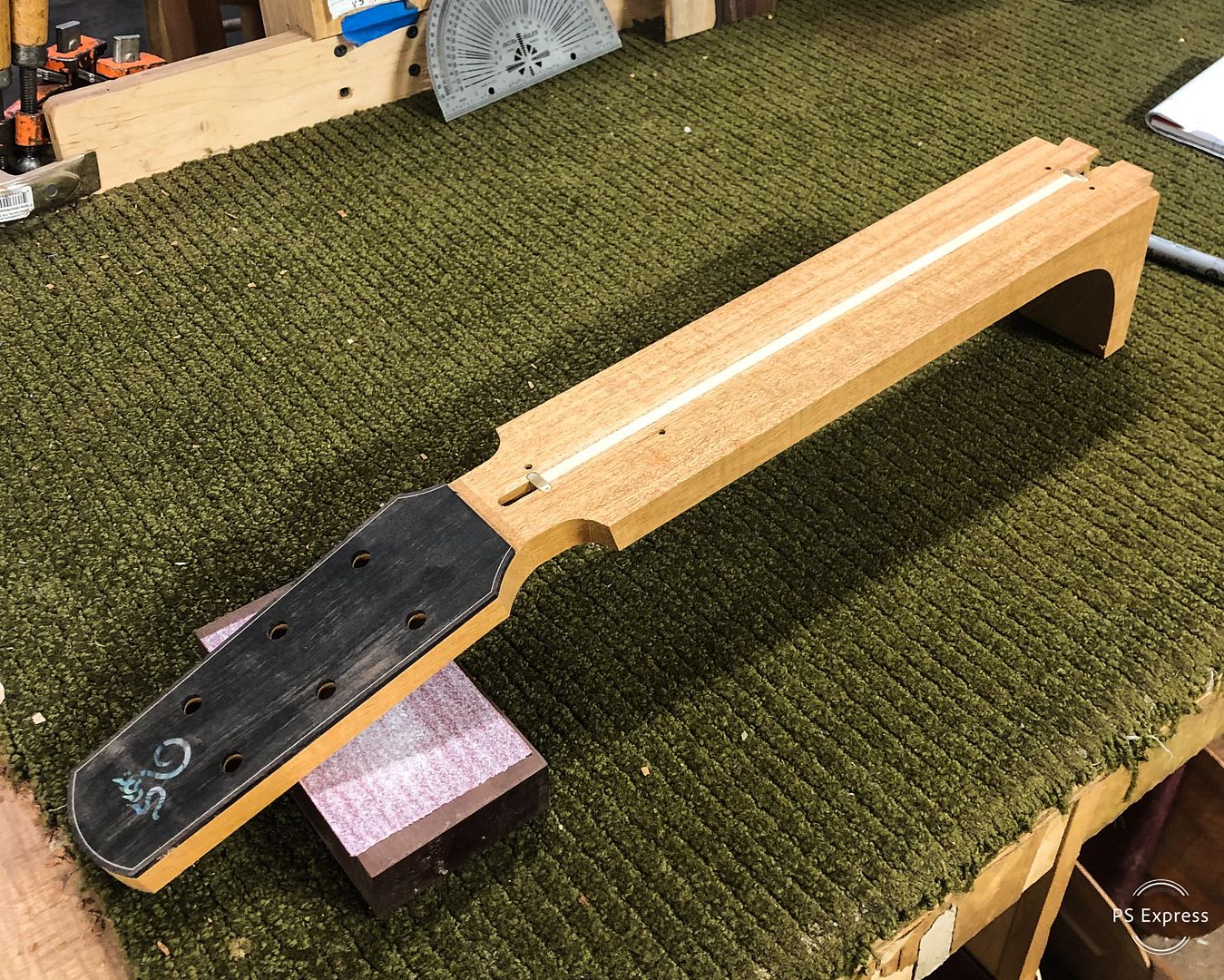
A simple snake head shaped Gaboon Ebony peghead veneer appears to be a nice color match with the Maple purfled/African Blackwood binding. A Green Abalone “SCGC” min-logo has also been installed.

I believe that the next update should include the bent rims.
January 20, 2022 at 12:45 am in reply to: Santa Cruz Coffee Break #35 Zooming’ with Richard Hoover #6816Thanks for your kind comments Bert. I hope that we have discussions here about our common passion of guitars. I see that Santa Cruz is scheduled to exhibit in April at the Artisan Guitar Show in Pennsylvania. It is possible that my FS will be complete by then. If they exhibit, I hope to spend some time with Richard.
Hank, being the son of an avid sports fisherman, I grew up knowing Bertram as being the finest of fishing boats. We were a bit down market from those. Dad got a Grady White which is fished with in his retirement until he passed.
January 19, 2022 at 7:13 pm in reply to: Santa Cruz Coffee Break #35 Zooming’ with Richard Hoover #6813Hank, my name is Bob and thanks for clarifying the sarcasm. My user name “iim7V7IM7” is the most common music progression in jazz music (e.g., D minor 7th > G Dominant 7th > C Major 7th).
January 19, 2022 at 2:02 am in reply to: Santa Cruz Coffee Break #35 Zooming’ with Richard Hoover #6810Hank, up until 15-20 years ago, there was no such thing as “Master Grade”, AAAAA, AAAA etc. AAA was aesthetically as good as it gets. There is way too much focus in today’s market on elevated aesthetic grading of tonewoods in my opinion. A few years back, on a guitar that I had commissioned with a solo luthier, I had a choice between a Master Grade Andrea Florinett Swiss Spruce top or a AA at best, 50-year old German Spruce top with lots of oxidative staining from age that he a luthier Jeffrey Elliott sourced back in the 1980s. I asked the luthier which sound board that he felt would make the superior guitar? With out hesitation he recommended the old top.
Thanks for conducting the interview with Richard. For those who are interested In learning more about Andrea Florinett and Florinett AG wood harvesting and processing practices there is an excellent interview with Andrea i. American Lutherie #93, 2008. If you are a member of Guild of American Luthiers (GAL) you can access it online. If not, I suspect back issues may be available for sale for those interested.
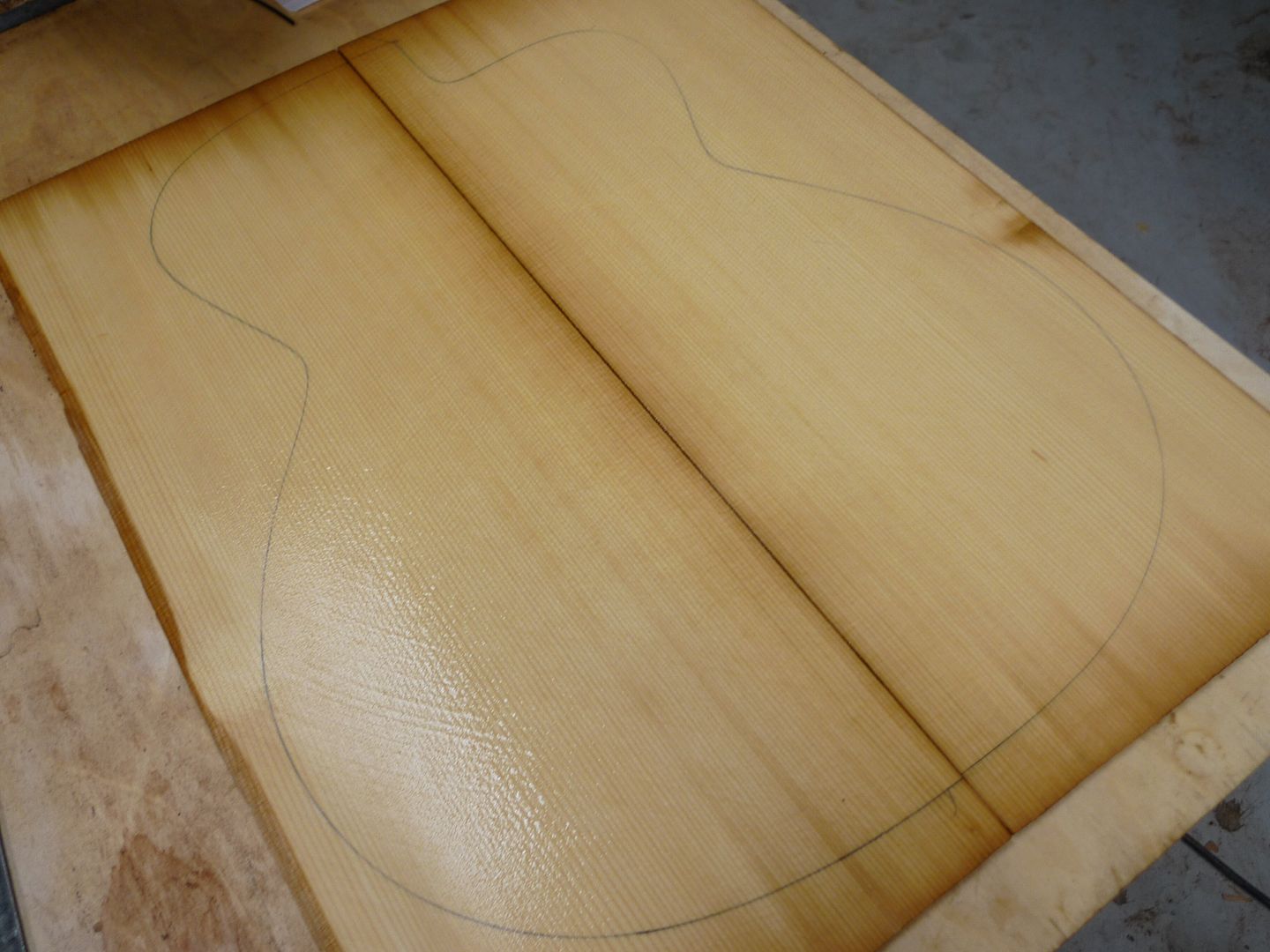
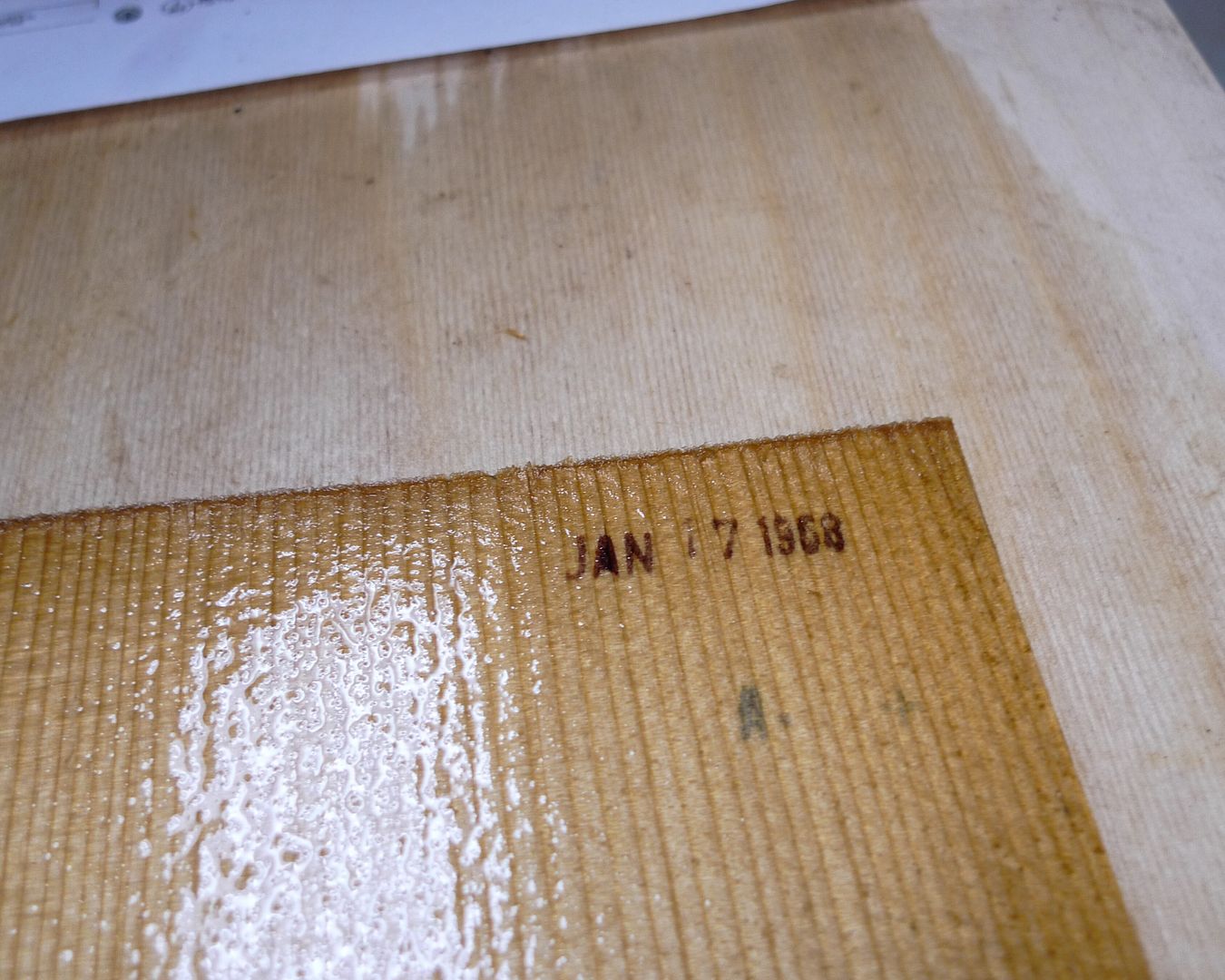
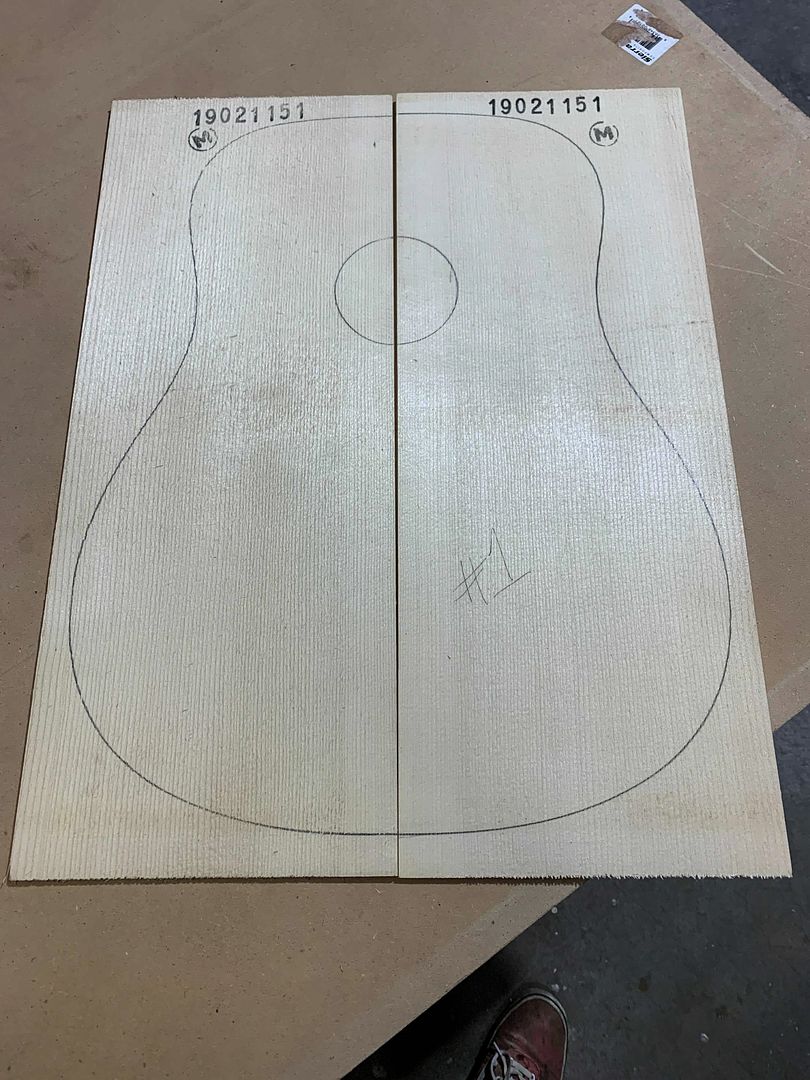
I was glad that aside from Florinett in Switzerland, he mentioned both Rudi Bachmann and Rivolta in Italy. There are others of course but all of these harvest, process and dry high quality luthier Picea abies tonewood. To Richard’s point about how the sets are inventoried and recorded by the high quality wood producers. For example, here is the Italian Spruce from Rudi Bachmann to that they chose for my FS. The “M” means “Master Grade” and the numbers mean: “19” Year of harvest 2019; “021” is log #21 and “151” is the set # 151.
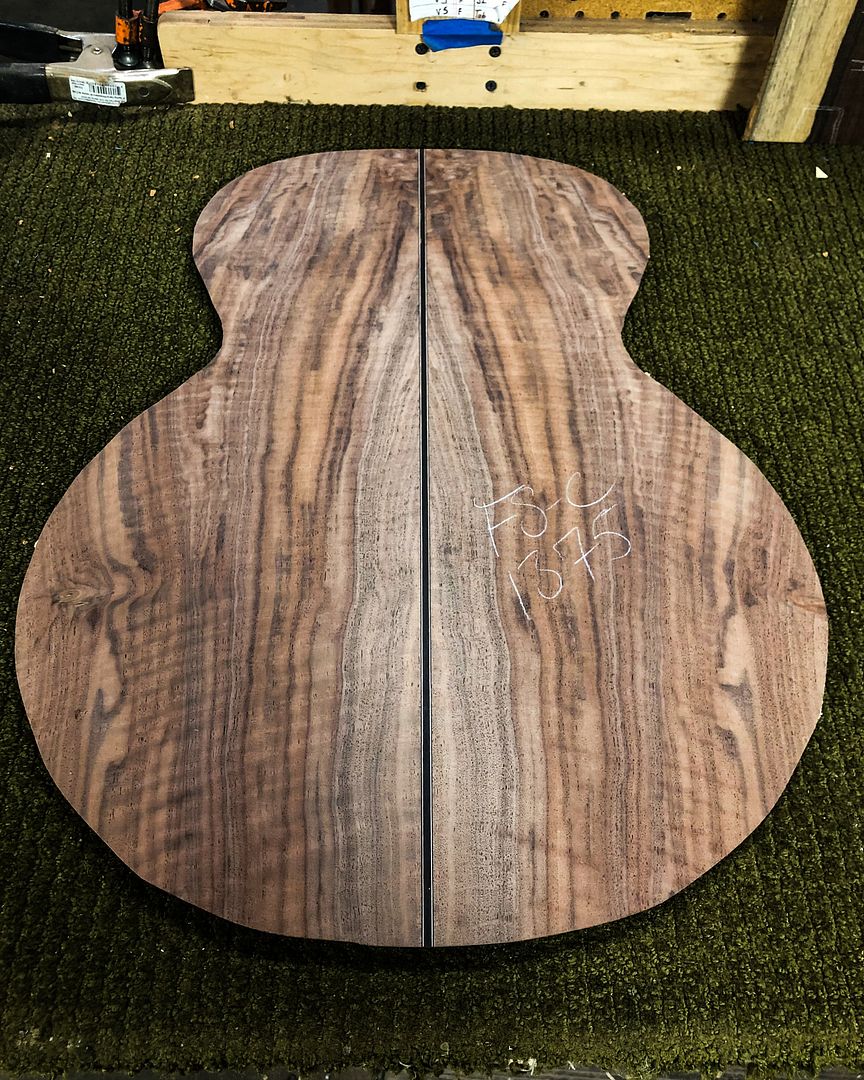
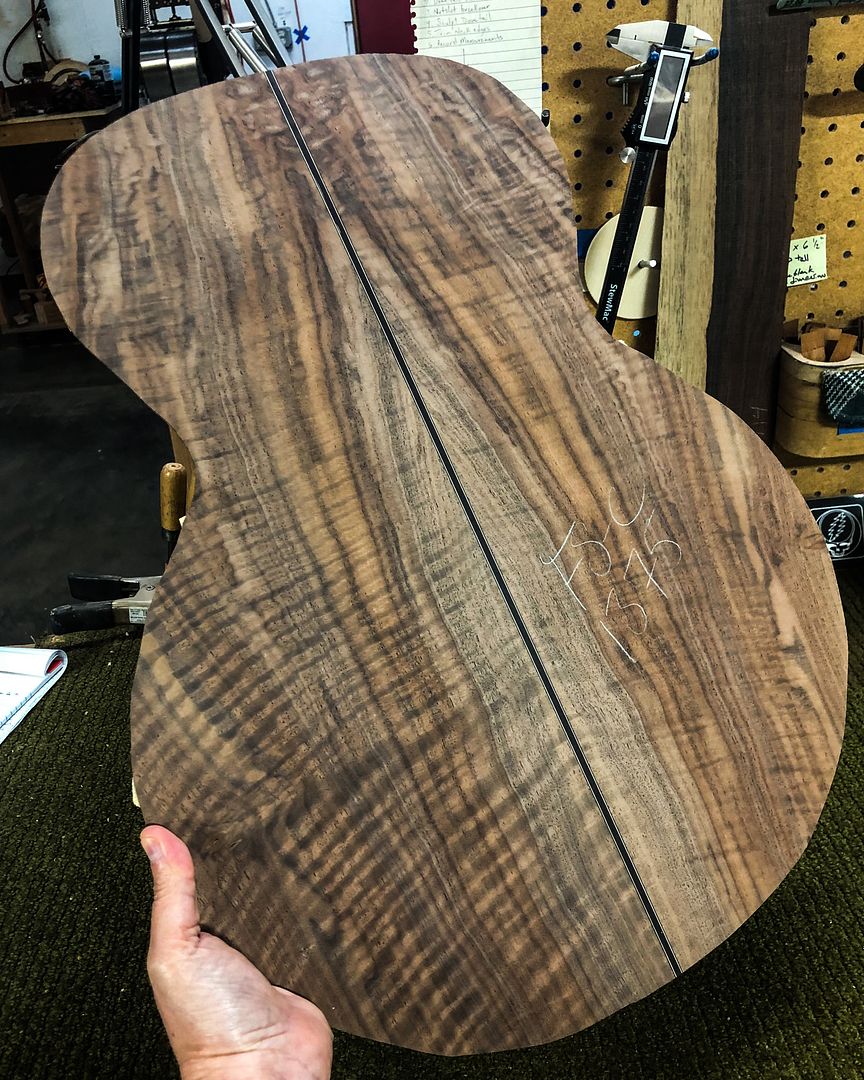
I also found it interesting that Richard referred the Juglans hindsii (Claro or California Black Walnut) as “Black Walnut”. This explains why Carolyn referred to the set used in my FS that is under construction as “Black Walnut” when I was thinking it was Claro Walnut. Black Walnut to me is eastern Black Walnut (Juglans nigra). As Tad was referring to, the root stock of the orchard wood is Juglans hindsii because it is robust to local disease and it is grafted to Juglans regia (English Walnut) because it has higher yield of nuts.
Here are some shots of the Claro Walnut (or California Black Walnut) back set for my FS from the shop last week.
It was a 1’-2’ tsunami. I am certain the shop should be fine. Tonga, where the eruption occurred is > 5,300 miles away.
Most Picea abies marketed as “Moon Spruce” comes from Andrea and Annette Florinett of Graubunden, Switzerland started Tonewood Switzerland in 1996. Andrea is actually trained in forestry. This is where Richard buys their “Moon Spruce”. Wood is harvested between October and February after a new Moon. The wood is then processed between April and June and then dried.
This is what Andrea has to say:
“We offer wood cut during a certain phase of the lunar cycle, but it’s also a system that’s built on three pillars. First, it is good quality wood that we have selected in the forest ourselves, grown above 1000 meters and with mostly tight annular rings. Second, the point in the lunar cycle is very important, during the inactive sap flow before the new moon. Third, natural air-drying is just as important. Our wood is air-dried until it is stable. These three factors — in-house selection, specific cutting dates, and air-drying — all contribute to what we feel is wood of high quality.”
This is their website:
https://www.tonewood.ch/specialty-moon-wood/
Martin Guhl’s company in Hamburg, Germany also sells Picea abies that he markets as “Moon Spruce”. You can read Martin’s “spiel” on the wood and it’s harvesting here:
I own a guitar with a top that was sourced from Andrea Florinett as “Moon Spruce” in a guitar that luthier Michael Bashkin made for me. It is a fine guitar no doubt. I personally do not put any special attributes to it based on the top’s method of harvest. It is simply high-quality wood, harvested from healthy, well located trees of a proper size that was properly processed, dried and selected for use by someone skilled in the art. I place more faith that and Michael’s ability to assess a sets acoustic potential than I do any “magical” properties attributed by the phase of the moon. There are great and not so great sets of “Moon Spruce” for sale out there. The folklore and imagery are compelling as in all things mysterious and guitar. I think that this is part of the attraction and any wood that can be named is always marketable in the high-end guitar business (e.g., Moon Spruce, Tunnel 13 Redwood, The Tree etc.).
When specifying the top for my SCGC Model FS, Carolyn/Richard did not recommend a “Moon Spruce” set, but a fine set of Italian Spruce set that was sourced from Rudolf Bachmann in Antholz-Mittertal, Italy. Rudi is also another fine supplier of Picea abies tonewood.
https://www.bachmann-tonewood.com/en/
Fine European spruce can be sourced from Rivolta in Italy, Rudolf Fuchs or Andreas Gleissner in Germany, Carpathian Tonewood in Romania, Eurotonewood (in PA but sources from the Ukraine).
The very BEST tops that I have had used in some of my guitars share two things:
1) They were all selected by master luthiers for their acoustic, aesthetic and structural potential and
2) They were all OLD! One top from Michael Millard (Froggy Bottom) was 130+ years old; another top from Nick Kukich (Franklin Guitar Co.) was re-sawn in 1968 and a top from luthier Bruce Sexauer was an old German Spruce top that he sourced from Ervin Somogyi that was from the 1960s as well.
My $.02
-
AuthorPosts
