Welcome to SCGC Players Forum › Forums › Ask Santa Cruz Guitar Company › What is Impact of Abalone inlay on Sound
- This topic has 12 replies, 6 voices, and was last updated 1 year, 1 month ago by
dwarfrat.
-
AuthorPosts
-
-
February 7, 2019 at 1:33 pm #1847
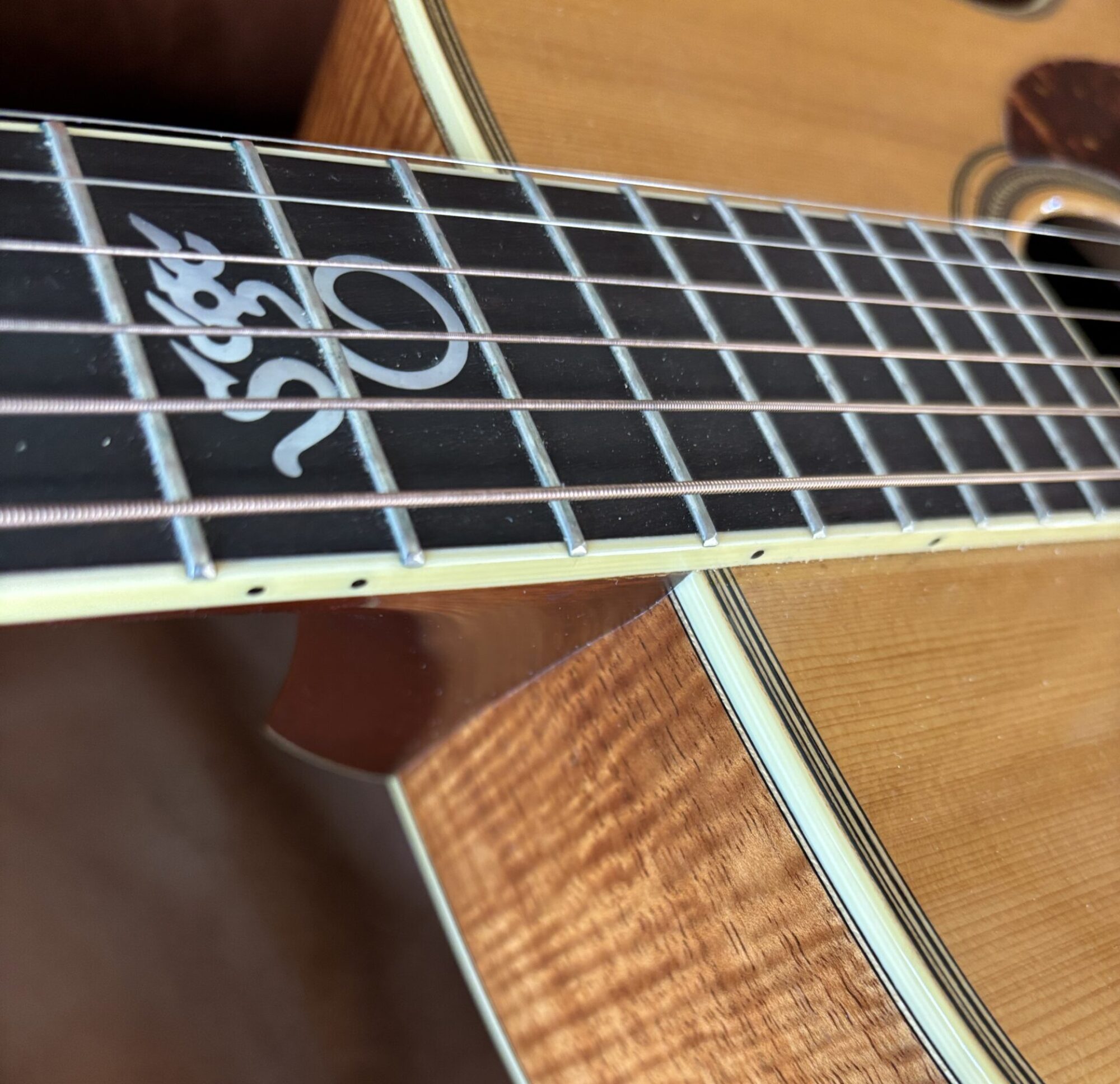
I listened to a video interview where you (Richard) are holding a Custom 000 (I believe) with 45 style abalone inlays. Richard,you make some statement to the effect that you place the inlay where it won’t impact the sound. How does abalone inlay used around the bouts or in other locations on a guitar impact tone?
– Paul –
-
February 7, 2019 at 8:46 pm #1850
Haasome,
I asked Richard this question about my 1934 D with style 45 appointments.
He answered me on this page…..He said it definitely did make a difference.
Maybe you can search this page for his answer.
Richard’s and Bill Warmouth’s and my conversation about this exact topic (before I ordered the 34) was the deciding factor in my getting the style 45 upgrade.
Just looked the topic is on page 2 ….under D45 appointments.-
This reply was modified 7 years, 6 months ago by
Hank.
-
This reply was modified 7 years, 6 months ago by
-
February 7, 2019 at 9:00 pm #1852
Thanks Zorro. I found it here – https://santacruzguitarplayers.com/forums/topic/d-45-appointments/
– Paul –
-
February 18, 2019 at 12:52 am #1865
Here it is Haasome! I did minor clarifying editorial here to make me look smarter.
Let’s start with how the binding affects the sound in general. The violin uses the little black/white/black fiber purfle to isolate the top from the body of the instrument. With out this the string’s energy would transfer from the top into the sides and back of the violin directing sound to the player at the expense of the audience. The same happens in the guitar. If the bindings don’t isolate the top from the body it will suffer in its ability to project the sound outward.
Your SCGC’s 45 style binding does an excellent job of isolation with two violin purfles book-ending abalone strips all working together by limiting the transfer of vibration away from your audience. Real wood or cellulose based bindings like Ivoroid add to the advantage. Contrast this with the laminated plastic binding found in production instruments. These will transfer rather than block vibration resulting in a guitar that seems louder to the player than to the audience.
All the best, Richard
-
February 18, 2019 at 1:55 am #1866
Thanks for the clarification and edification.
– Paul –
-
February 18, 2019 at 2:05 am #1867
WOW, this might be a forum first…… at long last the forum is actually working…you guys make me proud!
-
May 31, 2025 at 11:08 pm #9116
Never too late to resurrect a good topic… I think about this a lot. I hope to be gifting myself with another guitar this year, so the intense consideration has begun. I believe Richard to be correct (as always) that the abalone purfling impacts and can improve the sound. Witness the videos online- the Martin 000-42 always sounds far better than the 000-28. It is well established that Martin grades wood cosmetically, so why would a 42 sound clearer, more dynamic, more interesting than a 28 if the difference is that the wood looks better? The purfling. In a youtube video from TNAG/Carter, an otherwise standard SCGC OM on this video has jaw-dropping sound: https://www.youtube.com/watch?v=ULj1VFAg2pY.
So the questions are these:
1) If abalone is great and plastic is horrible, are other things like wood that Richard brings up almost or equal to the abalone level or does he mention them to be used in combination with abalone?
2) If abalone is all that, and if one has $2000-2500 to spend on options on an otherwise stock OM build, is abalone a better use of that money than wood selection… top or back/sides?
Just looking for some insights to ponder…
-
June 1, 2025 at 10:55 pm #9117
Richard talked about this on podcasts, this is the most recent
We don’t really see a lot of abalone inlay on violins, I think the money would be far better spent on wood, but that’s my opinion
-
June 5, 2025 at 2:19 am #9120
Thanks for that reply, indexless. I listened to the podcast and actually wound up with more rather than fewer questions. In a nutshell, RH seems to be saying that plastic is bad, wood is good, abalone is good. Strangely a well respected US manufacturer of our acquaintance reportedly uses plastic in pro level instruments. So back to my ponderings- wood and abalone purflings are good. So… 1) is abalone better or more or less equal to a better wood, and 2) are some woods better than others? If abalone is significantly better, that might be a good choice. If abalone and all woods offered by SCGC are basically equal, then esthetics rule the day. If they are equal to the standard issue ivoroid, I just saved myself a little money… or actually redircted some to other options.
-
June 6, 2025 at 11:39 pm #9125
Let me send that off to RH, maybe we can get him on TV 🙂
stay tuned
-
June 28, 2025 at 11:11 pm #9150
Haasome
Just uploaded your answer in the latest podcast, hope you enjoy
-
June 30, 2025 at 4:13 pm #9155
I watched that podcast a few hours after it was posted. It astonishes me that I can pose a question, only to have The Man devote most of a podcast answering it. I learned so much, as I always do from him. Thank you everyone for making this happen. Thank you Richard for such remarkable support. Safe travels to Europe…
-
July 1, 2025 at 5:01 pm #9158
Some 20 or more years ago, my Brooklyn friend Todd Stuart Philips commented about the 45 abalone inlay and how it removed enough wood to alter the tone by providing “Toasted wheat underpinnings”.
That phrase became famously quoted.
-
-
AuthorPosts


- You must be logged in to reply to this topic.